
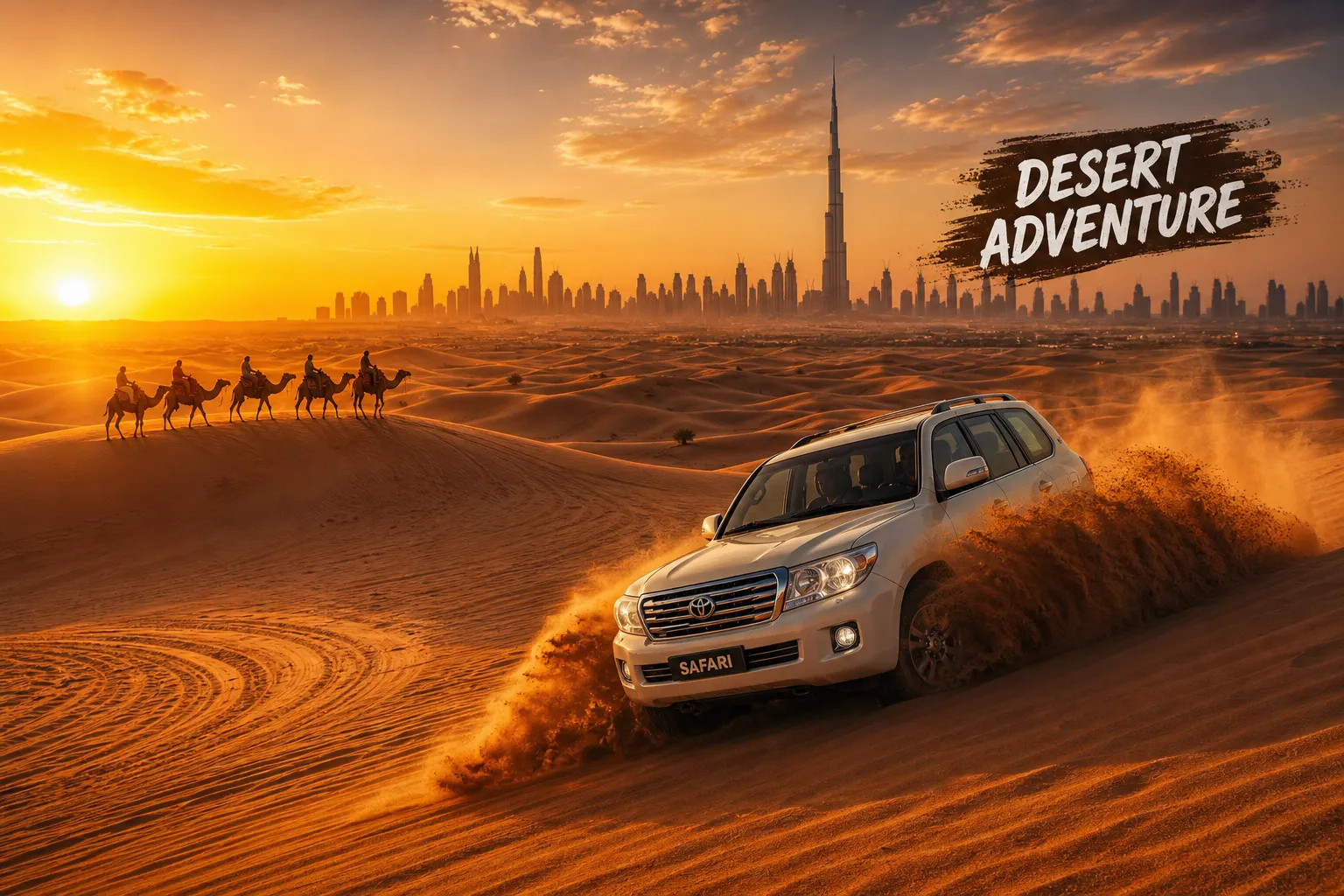

The 4×4 crests the first ridge, the engine strains for a second, and then the Dubai skyline vanishes completely behind a wall of deep red sand. What stretches in front of you is nothing but dune after dune rolling toward the horizon. That moment catches almost every first-timer off guard, and most people will tell you it became the single memory they carried home from the trip. A Dubai desert safari does that to people.
This experience isn’t just a box to check on a sightseeing list. For families, groups, and first-time visitors especially, a desert safari in Dubai is what gives the rest of the trip its texture. The challenge isn’t deciding whether to go; it’s knowing which format to book, what the price actually covers, and how to find an operator who delivers what they promise.
At Hama Tourism, we build curated Dubai packages that include desert safaris as a seamless, fully coordinated component, especially for groups traveling from the US. This guide gives you everything you need to make a confident booking decision: the right safari format for your schedule, an honest look at 2026 pricing, what to pack, and how to choose an operator you can trust.
What actually happens during a Dubai desert safari
Most visitors picture the dunes and the camels but aren’t sure how the day actually unfolds. Understanding the full arc of an evening safari, from hotel pickup to drop-off, means nothing catches you by surprise.
The drive from your hotel and the first dune stop
Your safari operator sends a shared 4×4 or a minibus that transfers you into individual 4x4s at a staging point. Pickup from central Dubai hotels, including Downtown, Dubai Marina, and Business Bay, typically happens between 2:30 and 4:00 PM. The drive to the Lahbab Red Dunes area, about 50 to 60 kilometers southeast of the city, takes 45 to 60 minutes depending on traffic and your hotel’s location.
Just before the dunes begin, the convoy pulls over for a tire-deflation stop. It’s actually a necessary prep step, not a delay. Dropping tire pressure lets the vehicles float over soft sand instead of digging in. Then the dune bashing starts: sharp drops, sideways slides, and climbs that feel steeper than they look. For first-timers, the ride alternates between exhilarating and genuinely surprising.
Sand activities before sunset: sandboarding and camel rides
After dune bashing wraps up, the group is dropped at a high dune crest for an open activity window before camp. This is where you try sandboarding down the face of the dune, take a short camel ride, and get the golden-hour photos that usually become everyone’s profile picture for the next six months. The light during this window, about 30 to 45 minutes before sunset, is exceptional.
One thing worth knowing: quad biking is not always included in the base price. Some operators include it in higher-tier packages, but many list it as an optional add-on at around AED 200 to 400. If quad biking matters to your group, confirm this before booking rather than assuming it’s covered.
The desert camp: BBQ dinner, belly dancing, and live entertainment
This is what separates a full desert safari from just a dune-bashing excursion. The Bedouin-style camp includes henna stations, shisha areas, and Arabic coffee with dates on arrival. Entertainment typically runs through a tanoura spinning show, belly dancing, and a fire show, with performances woven around the BBQ buffet. The buffet covers both vegetarian and non-vegetarian options alongside Arabic sides and soft drinks. Return to your hotel is typically between 9:30 and 10:30 PM.
Morning, evening, or overnight: which Dubai desert safari format fits your trip
The format you choose shapes the entire experience, not just the timing. Each option suits a different kind of traveler, and picking the wrong one is the most common avoidable mistake.
Morning safaris: shorter, cooler, and activity-focused
If your schedule is tight, a morning safari may be the smarter call. Pickups run around 6:00 to 8:00 AM, and the tour wraps up before noon at a total of 3.5 to 5 hours. Morning tours skip the camp dinner and live show entirely, so the focus stays on dune bashing and sand activities. This format works best for travelers with an afternoon flight or those who want the physical desert experience without committing a full evening. Cooler temperatures, especially from October through March, also make the activity sections noticeably more comfortable.
Evening desert safari: the classic choice for most travelers
The evening format is the most popular for good reason. The sunset stop, the camp entertainment, and the BBQ dinner all land in the same 6-to-7-hour window, and the pacing feels natural rather than rushed. Most families, first-time visitors, and groups choose this format because it delivers the complete desert experience in a single outing. If you’re not sure which type to book, the evening safari is almost always the right answer.
Overnight safaris: for the full desert immersion
Overnight safaris follow the same afternoon pickup as the evening format but continue after the day guests leave. The camp quiets down, stargazing begins, and the desert feels genuinely different after midnight. You sleep at the camp and return to your hotel after a sunrise breakfast the following morning. Total duration runs 16 to 18 hours, and this format suits travelers who want to disconnect completely rather than return to a hotel room the same night.
What to wear and bring to the desert
You don’t need special gear for a desert safari, but a few practical choices make the experience significantly more comfortable. The wrong footwear or an underprepared bag creates friction that’s easy to avoid.
Clothing that actually works in desert conditions
Loose, lightweight, breathable fabric in light colors handles the heat well. Long pants and a light long-sleeve top are better than shorts because they block sun and reduce sand irritation during activities. Avoid sandals and open-toed shoes for dune bashing; sneakers or closed trainers with socks keep the sand out and protect your feet. One layer people consistently underestimate: a light jacket or hoodie for the evening. Desert temperatures drop noticeably after sunset, especially from October through March, and the open camp can feel genuinely cold if you’re underprepared.
What to pack and what to leave in the hotel
Keep it simple. Sunscreen, sunglasses, and a fully charged phone or camera are the essentials. A small cross-body bag works better than a backpack here, it stays secure during dune bashing and doesn’t get in the way during activities. Bring any personal medications you need, and leave valuables, bulky luggage, and open-toed heels back at the hotel. Most camps provide water and light refreshments on arrival, so you don’t need to carry supplies into the dunes.
2026 price ranges and what’s included vs. what costs extra
Dubai desert safari prices in 2026 fall into three clear tiers. Knowing what each tier covers helps you avoid overpaying for inclusions you don’t need, or booking a budget option that leaves your group disappointed.
Budget to luxury: what the 2026 price tiers actually cover
Here’s how per-person pricing breaks down across the tiers:
- Budget (AED 80 to 190 per person): shared pickup, dune bashing, camel ride, sandboarding, basic camp access, BBQ buffet, and standard live entertainment on evening tours.
- Mid-range (AED 200 to 500 per person): hotel transfers, longer evening safari, dune bashing, camel ride, sandboarding, sunset stop, BBQ dinner, and better camp setups with VIP or semi-private seating.
- Luxury (AED 520 to 3,000+ per person): private or small-group 4×4, heritage or conservation-focused camp, gourmet or plated dining, and a more exclusive overall experience with far fewer guests on-site. This tier represents the luxury desert safari UAE end of the market, where the experience is as much about atmosphere and service as the desert itself.
Private desert safari options affect per-person pricing significantly. A private 4×4 charter runs roughly AED 1,200 to 2,500 per vehicle rather than per person, which makes it a practical choice for families or groups of four to six who want more flexibility without paying luxury-tier rates per head.
Activities that usually cost extra
Dune bashing, sandboarding, and a short camel ride are included across virtually all tiers. Quad biking is the most common paid add-on, priced around AED 200 to 400. Dune buggies, professional photo and video packages, and alcohol where available also come at additional cost. Before booking, confirm the exact inclusion list in writing so there are no surprises at the camp.
How to book the right operator for your Dubai desert safari
The operator you choose determines the safety of the dune bashing, the quality of the camp, and whether your group spends the evening relaxed or frustrated. This decision matters more than most travelers realize when they’re scrolling through listings.
What separates a great operator from a mediocre one
Start with licensing. Reputable operators hold DTCM (Department of Tourism and Commerce Marketing) or DET (Department of Economy and Tourism) certification, and they’ll display it clearly. Verified reviews on platforms like TripAdvisor and GetYourGuide provide a reliable second signal. Among the well-rated options for desert safaris in Dubai in 2026, Platinum Heritage scores 4.9 out of 5 across more than 12,800 reviews, with a conservation-focused approach that appeals to travelers who want a quieter, more premium experience. Arabian Adventures scores 4.5 out of 5 and is a consistent choice for families. These are useful benchmarks when you’re comparing options.
Why Hama Tourism’s curated desert safari stands out for groups
For travelers booking from the United States, especially families and diaspora groups planning a full Dubai trip, the logistical coordination challenge across a full group trip is real. Managing hotel pickup timing, grouping everyone into the right vehicles, and making sure the safari connects smoothly with the rest of the itinerary takes real experience to handle well. That’s exactly what Hama Tourism’s Dubai packages are built to do.
The desert safari is bundled into Hama Tourism’s broader Dubai packages alongside other curated experiences, with seamless hotel pickup coordination that works for any group size. Instant booking confirmation means you’re not waiting on back-and-forth emails while your travel plans come together. For families with mixed age groups or community groups traveling from US cities, having one point of contact handle the transfers, timing, and logistics makes the entire trip easier to manage.
The desert belongs in your Dubai itinerary
A Dubai desert safari sounds like a tourist excursion, but it almost always turns into the memory people talk about long after they’re home. The city skyline, the architecture, the shopping: those are impressive. The dunes are something different. They’re quiet in a way Dubai rarely is, and the contrast hits harder than most visitors expect.
The choice framework is straightforward: book an evening safari if you want the full experience and you have the evening free. Book a morning safari if time is tight. Book an overnight safari if you want to go deeper and aren’t in a rush to get back. All three deliver on the core experience; the differences come down to your schedule and the kind of memories you want to take home.
If you’re already planning a Dubai trip from the US, a Dubai desert safari belongs in the itinerary. Hama Tourism’s Dubai packages include curated desert safari options designed for group travel, with end-to-end coordination from pickup to drop-off. Reach out to our team to lock it in alongside the rest of your Dubai experience.
0 Comment